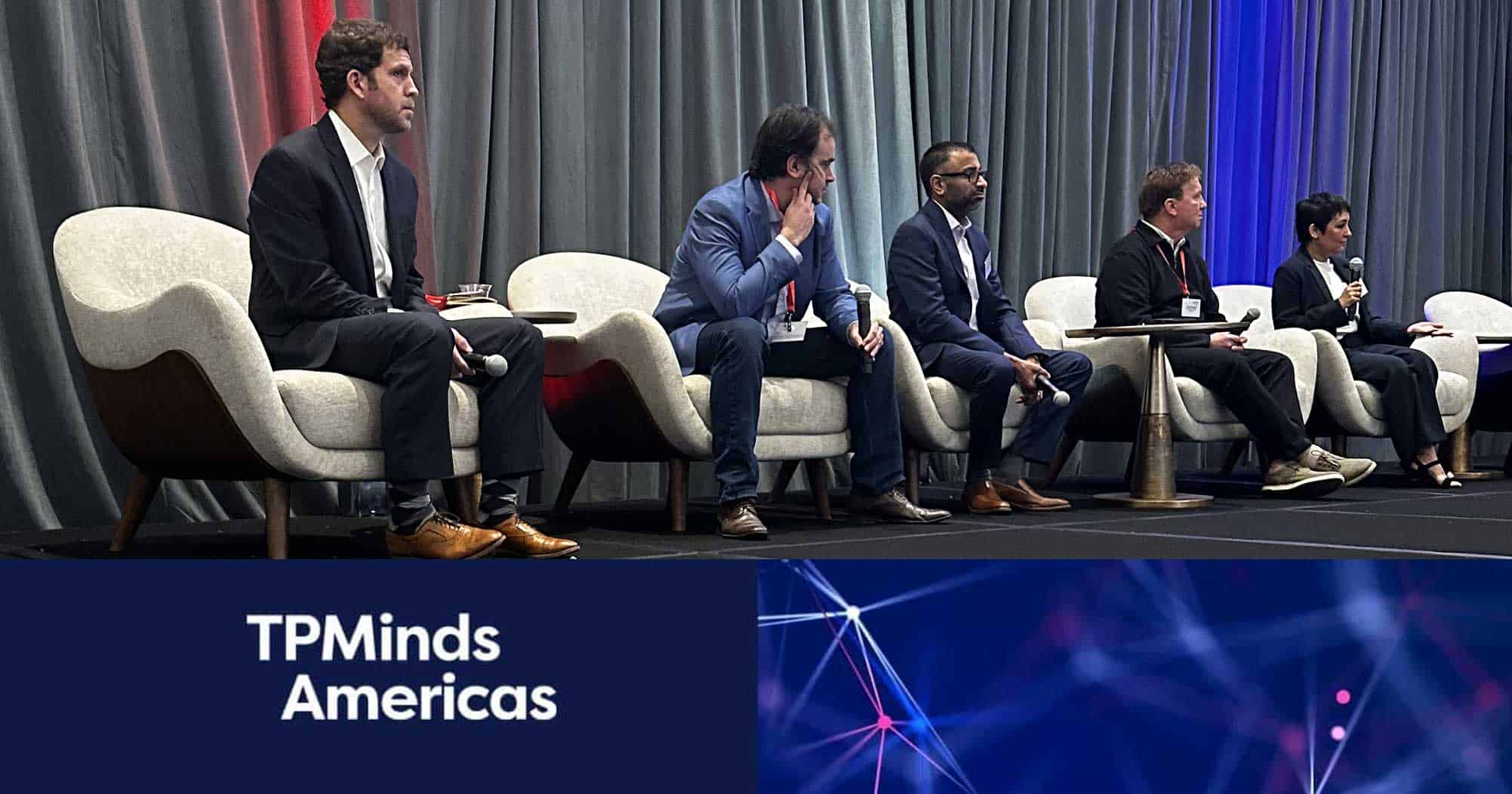
Uncertainty management emerged as the central theme at this year’s TP Minds conference. Discussions highlighted the evolving transfer pricing environment while reinforcing the enduring relevance of core principles. The arm’s length standard continues to be the most widely accepted and understood approach, even as other methods gain attention. Rapid changes driven by tariffs and bilateral agreements are requiring companies to refine processes and adapt quickly.
The event drew strong attendance, featuring informative panels and presentations. PlaidCloud was once again a sponsor, providing valuable opportunities to connect with practitioners, advisory firms, and industry experts.
Several recurring themes surfaced during the sessions:
- Tariff volatility is driving demand for flexible, fast scenario modeling to evaluate potential impacts in real time.
- Bilateral agreements are increasingly supplementing or in some cases replacing multilateral frameworks, creating a more fragmented landscape.
These developments are pulling tax functions into more frequent and substantive C-suite conversations, both for strategic planning and tactical decision-making.
Maintaining a clear, linear connection between policy, intercompany agreements, and operational execution remains essential. In today’s fast-moving environment, well-documented processes supported by appropriate technology are critical for compliance, monitoring, and analysis. A strong documentary trail linking policy to execution is often one of the first lines of defense in a tax controversy.
Supply chain restructuring, M&A activity, and shifts in product mix add further complexity. These changes frequently manifest at the sales order line and SKU level, where traditional tools such as Excel or legacy workflows can struggle to keep pace with rapid business and legal entity updates.
Both large and small companies struggle with incorporating multiple ledgers and ERP systems as part of the process. The solution that many are taking, which is a multi-year journey, is consolidating to a single ERP instance. However, for large companies, this may be impractical. For smaller companies on systems like Sage Intacct, NetSuite, and Dynamics, the need for robust TP tools need to exist outside of the ERP system itself. PlaidCloud’s ability to connect across multiple ERP systems, homogenize data, perform balanced postings, calculate price reset recommendations, and apply classification rules with point-and-click setup may be a good choice to handle this situation.
Artificial intelligence was a recurring topic, though its current practical application remains largely focused on generating comparables and supporting documentation. PlaidCloud emphasized a broader role for AI, enabling finance and tax teams to analyze operational and tax impacts through natural language queries. The effectiveness of any AI system depends heavily on the quality and completeness of the underlying knowledge base, an area where PlaidCloud has invested significantly.
While the fundamental principles of operational transfer pricing and decision making remain consistent, the speed and frequency of international customs and tax changes have increased significantly. Tax departments often face this challenge with constrained budgets. However, as the strategic and economic importance of effective tax management grows, budget allocations are expected to follow.
Overall, the conference underscored that success in today’s transfer pricing environment depends on agility, robust documentation, and the ability to integrate changing rules into day-to-day operations without delay.